


























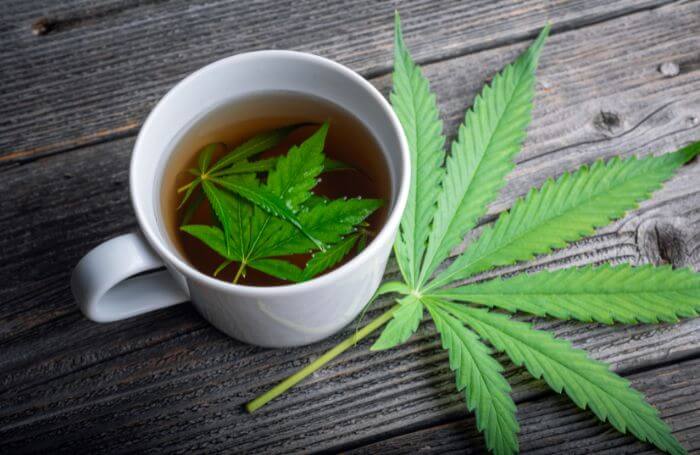
A pilot study published in 2024 examined a prescribed cannabis decoction in adults with fibromyalgia whose pain had persisted despite conventional treatment. Conducted at San Carlo Hospital in Potenza, Italy, it reported changes in pain and quality-of-life scores over six months. These findings are preliminary and do not establish that cannabis tea is an effective or risk-free treatment.
The paper in the Journal of Clinical Medicine describes improvement among the patients who completed the study. Its trial registry entry identifies a single-group study without masking. There was no placebo or other comparison group, so the observed changes cannot establish how much was caused by the preparation itself.
The study and its findings
The final analysis included 30 patients, from 34 initially recruited. Two did not start treatment in time and two stopped because of side effects. The prescribed flower was described as containing 22% THC and less than 1% CBD. Patients used it as a decoction under the study’s clinical protocol; these percentages describe the flower, not the concentration in a finished drink or a recommended consumer dose.
Among the 30 completers, the median pain score fell from 8 to 4 over six months on a scale running from 0 to 10. Physical and mental health questionnaire scores also improved overall. A change in a group median does not mean that every participant experienced the same reduction, and statistical significance in this study does not resolve the absence of a comparison group.
The safety results need to include the people who withdrew. Two patients developed psychomotor agitation after the first administration and stopped treatment. The remaining 30 completers reported no side effects during the study. Reporting only the completers would give an incomplete picture; these findings do not establish that the preparation is free of adverse effects.
The authors considered the results encouraging and called for larger, randomised, placebo-controlled trials. That recommendation matters: the pilot can help identify questions for future research, but it cannot establish comparative effectiveness or show that this preparation should replace an individual patient’s existing treatment.
Broader implications for fibromyalgia research
The paper also reviewed ten earlier clinical studies: eight observational studies and two randomised trials. They used different preparations, administration routes and outcome measures. Research involving oils, inhaled products or other cannabis preparations should not be treated as direct proof about a particular decoction. The review provides context for the pilot, rather than a single uniform answer about cannabis and fibromyalgia.
Changes in opioid use are a separate question. The review included an observational study of cannabis oils and medication prescribing patterns, but this is not proof that cannabis tea causes a reduction in opioid requirements. In the Potenza pilot, stopping previous drug treatment was part of the study protocol. It was not an independently demonstrated opioid-reduction outcome and should not be read as advice to stop prescribed medicines.
What further research needs to establish
Larger controlled studies are needed to separate treatment effects from expectations, symptom fluctuations and other influences. The pilot relied on self-reported outcomes and analysed participants who adhered to the protocol, with a small final sample. Future research should assess both benefits and harms, include withdrawals in the interpretation, and explain which preparation and patient group its results apply to.
What the study does and doesn’t show
Research into additional options for people living with persistent pain is worth following. The reported improvements are a reason to investigate further, while the side-effect withdrawals are a reminder to assess tolerability just as carefully. Describing a preparation as natural does not remove that responsibility or establish that it will help another patient.
The possibility of reducing reliance on other pain medicines is also an important research question. This pilot does not answer it on its own, and conclusions from observational prescribing data require care. Patients need an individual treatment discussion that considers their existing medicines and circumstances, rather than a promise based on a small study.
This research contributes to the discussion about cannabis and chronic pain by providing preliminary observations and highlighting questions that remain open. Its practical value is in guiding better studies and more accurate conversations about the evidence. Further work should clarify effectiveness, tolerability and appropriate clinical use without turning an encouraging early result into an assured treatment benefit.


